
About This Location: The site of Brandy Bottom has the protection of being listed as a Scheduled Ancient Monument due to Historic England’s view of it as the best-preserved layout…
Clandown
About This Location: Clandown colliery is first mentioned in 1793, sinking of the shaft was around 1801 when the lease was signed. The site chosen for the sinking was quite…
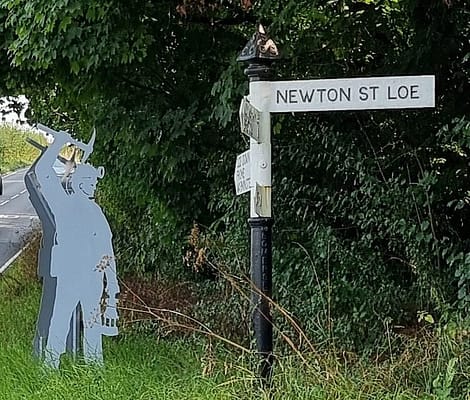
Newton St Loe
About This Location: There were 4 coal mines in the Bath area. Glob Pit —Near the Globe Inn. Newton Pit —- Near Newton St Loe Quarry Pit— bottom of Pennyquick…

Westfield Old Pit Road
About This Location: The earliest mention of Norton Hill Old Pit is in 1839, the shafts being sunk in 1846, it was situated close to the Radstock to Shepton Mallet…

Tunley
About This Location: Priston was the last deep mine to be opened in Somerset, sinking of the shaft started in March 1914. The sinking was carried out during the years…

Farrington Gurney
About This Location: In 1786 a drift was being driven to cut as much coal as possible, a drift is an underground roadway driven down at an angle, unlike the…
Paulton Basin
About This Location: Paulton Basin is the terminus of the Northern branch of the Somerset Coal Canal and was a central point for at least 15 collieries around Paulton. Timsbury…

Somerset Coal Mining – History!
We believe that Somerset coal was first discovered by the Romans. They were in the West Country 43AD, and there are references to it being used at the Temple…

Timsbury
About This Location: On January 24th 1791 an agreement for the sinking of Upper Conygre Pit was agreed, the shaft had a diameter of 8 feet, 346 yards deep. Shortly…

Writhlington
About This Location: First was Upper Writhlington pit, it was opened in 1805, the shaft was 11ft 3 inches in diameter and 278 yards deep. In 1868 the shaft was…